
SEO for Small Car Rental Companies: Beat Big Brands in 2026
Learn how small car rental companies can outrank industry giants through local SEO, AI optimisation, and strategic content. Complete 2026 guide to Google Business, schema markup, and long-tail keywords that convert browsers into bookings.
AUTOMOTIVE SEOSMES
Jorge Jaroslavsky
12/4/202510 min read
Competing with Big Brands in 2026
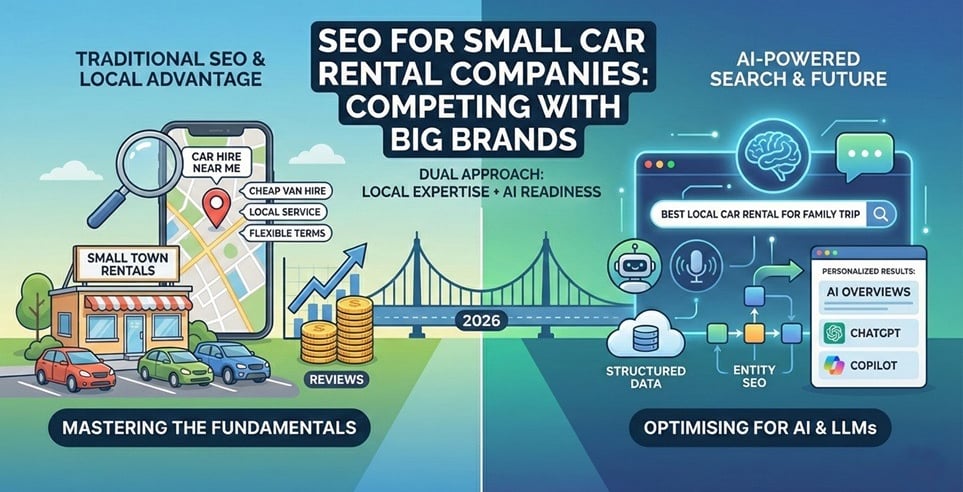
For small, independent car rental companies, competing against household names like Enterprise, Hertz, or Europcar can feel like an uphill battle. These corporate giants have massive marketing budgets, extensive fleets, and decades of brand recognition. However, the digital landscape—particularly search engine optimisation (SEO)—has levelled the playing field in ways that favour agility, local expertise, and personalised service over sheer brand power.
The key to success lies in a dual approach: mastering traditional, proven SEO tactics whilst simultaneously optimising for the emerging world of AI-powered search tools like ChatGPT, Microsoft Copilot, Perplexity, and Google's AI Overviews. This comprehensive guide will show you exactly how to implement both strategies to capture customers who are actively searching for car rental services in your area.
Why Small Car Rental Companies Have a Competitive Advantage
Before diving into tactics, it's important to understand your strategic advantages. Large rental companies excel at brand recognition and airport presence, but they often struggle with local nuance, personalised service, and rapid adaptation to local market needs. Small companies can win by:
Providing genuinely personalised customer service that corporate policies can't match
Responding quickly to local events, seasonal demands, and community needs
Building deep relationships with local businesses, hotels, and tourist attractions
Offering flexible terms and unique vehicle options that big chains overlook
Establishing themselves as local experts rather than faceless corporations
SEO allows you to translate these advantages into visibility precisely when potential customers are making rental decisions.
If you're new to SEO for small businesses, my blog covers the fundamentals that apply across all industries.
Part One: Mastering Traditional SEO Fundamentals
1. Dominate Local SEO
Whilst car rental has unique characteristics, many strategies overlap with broader automotive industry SEO. The following tactics are specifically tailored for rental businesses.
Local SEO is your primary battleground. Research consistently shows that the majority of car rental searches include local intent—phrases like "car rental near me," "hire a car in Manchester," or "cheap car rental Leeds Bradford Airport." Here's how to capture this valuable traffic:
Optimise Your Google Business Profile
Your Google Business Profile (GBP) is often the first impression potential customers have of your company. Claim your profile immediately if you haven't already, then optimise every available field. Ensure your business name, address, and phone number (NAP) are absolutely consistent across your website and all online platforms. Select the most accurate primary category—typically "Car Rental Agency"—and add relevant secondary categories like "Van Rental Agency" or "Truck Rental Agency" if applicable.
Upload high-quality photographs of your entire fleet, showing vehicles from multiple angles in clean, well-lit conditions. Include images of your physical premises, staff, and the booking process to build trust. Update your business hours accurately, including special holiday hours, as incorrect information drives potential customers straight to competitors.
Generate and Manage Customer Reviews
Reviews are currency in local SEO. Search engines use review quantity, quality, and recency as significant ranking factors, whilst customers use them as the primary decision-making tool. Develop a systematic approach to requesting reviews from satisfied customers—via email follow-ups, text messages, or during vehicle return.
Respond professionally to every review, positive or negative. Thank customers for positive feedback and address concerns in negative reviews with empathy and solutions. This demonstrates to both search engines and future customers that you're an engaged, trustworthy business.
Build Consistent Local Citations
Citations—mentions of your business name, address, and phone number across the web—signal legitimacy to search engines. Ensure your details appear consistently on local directories, tourism websites, chamber of commerce listings, and industry-specific platforms. Inconsistent information confuses search engines and erodes trust.
Implement Local Schema Markup
Schema markup is structured data that helps search engines understand your business details with precision. Implement LocalBusiness or AutoRental schema on your website, including your exact location coordinates, opening hours, price ranges, and accepted payment methods. This technical enhancement can trigger rich snippets in search results, displaying your business information prominently with star ratings, hours, and pricing—dramatically improving click-through rates.
2. Target High-Intent, Long-Tail Keywords
Competing for generic terms like "car rental" against multinational corporations is futile and wasteful. Instead, focus your efforts on long-tail keywords—longer, more specific search phrases that indicate strong purchase intent and face less competition.
Focus on Specific Customer Needs
Think about the precise scenarios your customers face. They're not just searching for "car rental"—they need a "7-seater van for family holiday in Cornwall," "one-day luxury car hire for wedding in Birmingham," or "monthly vehicle rental for students in Manchester." These specific queries have lower search volumes but dramatically higher conversion rates and weaker competition.
Use Location-Specific Modifiers
Combine vehicle types with locations, rental durations, and local landmarks. Target phrases like "SUV rental near Manchester Airport," "cheap weekend car hire Leeds city centre," or "long-term van rental Yorkshire." These geo-modified keywords connect you directly with customers in your service area.
Leverage Keyword Research Tools
Use Google Keyword Planner, Ubersuggest, or similar tools to identify long-tail opportunities. Look for keywords with decent monthly search volumes (even 50-100 searches can be valuable) and low competition scores. These represent untapped opportunities where your content can rank on page one relatively quickly.
3. Create High-Quality, Localised Content
Content marketing isn't about churning out generic blog posts—it's about positioning your company as the definitive local expert on car rental and travel in your area.
Develop Location-Specific Landing Pages
Create dedicated pages for each city, airport, or neighbourhood you serve. A page titled "Car Rental Near Leeds Bradford Airport" should include detailed directions to your location, specific pickup and drop-off procedures for airport customers, parking instructions, and even recommendations for what to do if flights are delayed. Include genuine testimonials from customers who've rented specifically at that location.
Publish Informative, Locally-Focused Blog Content
Write articles that demonstrate local expertise: "Essential Tips for Driving in the Peak District," "Best Weekend Road Trips from Bristol," "Guide to Parking in Central London for Visitors," or "What Size Vehicle Do You Need for a Family Holiday in Devon?" These posts attract traffic from people planning trips in your area—exactly your target audience.
Optimise Individual Fleet Pages
Create separate, detailed pages for each vehicle category: economy cars, family estates, luxury vehicles, vans, and speciality vehicles. Include multiple high-quality photographs, comprehensive specifications, clear pricing structures, and prominent "Check Availability" or "Book Now" buttons. These pages should target specific searches like "hire a Mercedes in Manchester" or "rent a 9-seater minibus Birmingham."
4. Optimise User Experience and Technical SEO
A beautifully optimised website means nothing if visitors encounter a slow, confusing, or non-functional experience. Technical SEO and user experience are now inseparable ranking factors.
Ensure Mobile-First Design
Over 60% of car rental searches occur on mobile devices, often by travellers who've just arrived at airports or train stations. Your website must function flawlessly on smartphones and tablets. Test your site on multiple devices, ensuring buttons are easily tappable, text is readable without zooming, and forms are simple to complete on small screens.
Optimise Page Load Speed
Use Google PageSpeed Insights to audit your website's performance. Compress images, enable browser caching, minimise CSS and JavaScript files, and consider a content delivery network (CDN) to serve files faster. Every second of delay increases bounce rates and damages both your search rankings and conversion rates.
Streamline the Booking Process
Make booking a vehicle as frictionless as possible. Reduce the number of steps, eliminate unnecessary form fields, and provide clear progress indicators. Display pricing transparently, including all fees and insurance options. Offer guest checkout alongside account creation. The easier you make it to book, the more bookings you'll receive.
Create Intuitive Navigation
Use clear, descriptive menu labels like "Our Fleet," "Locations," "Pricing," and "Contact Us" rather than creative but vague terms. Implement breadcrumb navigation so users always know where they are on your site. Add internal links between related pages—for instance, linking from blog posts about Devon road trips to your "SUV Rental Plymouth" landing page.
5. Build Quality Backlinks
Backlinks—links from other websites to yours—remain one of the strongest ranking signals. Focus on earning links from locally relevant and industry-appropriate sources.
Forge Local Partnerships
Approach local hotels, bed and breakfasts, and travel agencies about reciprocal promotion. Offer their guests a discount code in exchange for a link from their "Getting Here" or "Local Services" page. Partner with tourist attractions—perhaps offering special rates for visitors to local museums or theme parks in exchange for being listed on their website.
Get Listed in Industry Directories
Beyond general business directories, seek out automotive and travel-specific listings. Submit your business to sites like Car Hire Centre, rental car comparison sites, and regional tourism boards. Whilst some may charge fees, the combination of referral traffic and SEO value often justifies the investment.
Engage with Your Community
Sponsor local sports teams, charity events, or community festivals. These activities often result in mentions and links from event websites, local news coverage, and community organisations—all valuable local backlinks that boost your authority in search engines.
Part Two: Optimising for AI Search and Large Language Models
The search landscape is rapidly evolving. AI-powered tools like ChatGPT, Microsoft Copilot, Perplexity, and Google's AI Overviews are changing how people find information. These tools synthesise information from multiple sources to provide direct answers, making it crucial that your content is easily digestible by AI systems.
1. Implement Structured Data Rigorously
Structured data (schema markup) is the bridge between your content and AI understanding. It presents information in a machine-readable format that AI models prioritise when synthesising answers.
Deploy Comprehensive Service and Product Schema
Use specific schema types to explicitly define every aspect of your business. Implement Service schema for each rental service you offer, Product schema for vehicle categories, and Offer schema to indicate pricing structures. Include details like rental duration options, included mileage, insurance levels, and additional equipment (child seats, GPS systems, roof racks).
Implement FAQ Schema Extensively
AI Overviews frequently extract information from structured FAQ sections. Create comprehensive FAQ pages covering common questions about age requirements, insurance, fuel policies, deposit amounts, acceptable payment methods, and cancellation terms. Wrap each question-answer pair in FAQPage schema markup so AI tools can easily identify and extract your answers.
Maintain Real-Time Schema Updates
Unlike static content, schema markup should reflect current conditions. Update your LocalBusiness schema with accurate holiday hours, seasonal pricing changes, and current vehicle availability. The more current and detailed your structured data, the more likely AI tools will cite your information.
2. Adopt Question-and-Answer Content Formats
AI queries typically start as natural language questions. Your content should mirror this conversational approach with direct, clear answers.
Provide Immediate, Direct Answers
When someone asks an AI tool "What's the minimum age to rent a van in Leeds?", they want an immediate answer. Structure your content accordingly: "To rent a van with our company in Leeds, you must be at least 25 years old and have held a full UK driving licence for a minimum of 2 years. Drivers aged 25-70 are covered by our standard insurance policy."
Begin key sections with the direct answer in the first sentence, then elaborate with additional context. This format serves both human readers (who scan content) and AI tools (which prioritise clear, factual statements).
Use Clear Summary Statements
At the top of longer pages, provide bolded summary statements that encapsulate key information. For example, on your pricing page: "Our daily rates start from £25 for economy cars, £45 for family estates, and £65 for premium vehicles. Weekly rentals receive a 15% discount. All rates include unlimited mileage within the UK and basic insurance coverage." These summaries are prime candidates for AI extraction.
3. Focus on Entity-Based SEO
Modern search algorithms—and the AI models built upon them—understand concepts and entities rather than just matching keywords. Establish your business as a recognised entity with clear expertise.
Establish Topical Authority
Demonstrate deep knowledge of your local area. Reference specific landmarks, local regulations, traffic patterns, and seasonal considerations. Publish content about "navigating Manchester's Clean Air Zone with rental vehicles" or "parking restrictions in York city centre." Mention specific locations by name: "We're located 10 minutes from Leeds Bradford Airport, just off Junction 46 of the A1(M), adjacent to the White Rose Shopping Centre."
Define Your Unique Value Proposition Clearly
Use unambiguous language to describe what differentiates you from competitors. Instead of vague claims like "great service," specify: "We offer complimentary airport pickup and drop-off within 5 miles of our depot," "We specialise in insurance replacement vehicles with direct insurer billing," or "We maintain a fleet of vehicles under 2 years old, serviced every 5,000 miles." These concrete USPs help AI tools identify and communicate your specific advantages when users ask for comparisons.
Build Entity Associations
Link your business to recognised local entities. Mention partnerships with named hotels, sponsorship of specific local teams or events, and affiliations with trade bodies like the British Vehicle Rental and Leasing Association. These connections help AI models understand your position within the local business ecosystem.
4. Optimise for Comparison and Recommendation Queries
Users increasingly ask AI tools to make recommendations or comparisons: "Which car rental company in Leeds offers the best value?" or "Should I rent from a local company or a big chain in Birmingham?"
Create Transparent Comparison Content
Develop content that honestly addresses how you compare to alternatives. An article titled "Local vs National Car Rental Companies: What's Best for You?" can outline scenarios where each option makes sense, whilst highlighting your specific advantages—personal service, flexible terms, local expertise, potentially better value for longer rentals, and easier communication.
Highlight Specific Advantages with Evidence
Instead of generic claims, provide verifiable specifics: "While national chains typically charge £15-25 for additional drivers, we include one additional driver free of charge" or "Our average customer review score of 4.8/5 across 230 Google reviews reflects our commitment to service." These concrete comparisons give AI tools factual data to work with when answering user queries.
Measuring Success and Continuous Improvement
Implement Google Analytics 4 and Google Search Console to monitor your SEO performance. Track rankings for your target keywords, organic traffic growth, conversion rates from organic search, and the specific pages driving bookings. Monitor your Google Business Profile insights to understand how customers find you locally.
Review performance monthly, identifying which content performs well and which underperforms. Double down on successful topics and formats whilst refining or removing content that doesn't resonate. SEO is not a one-time project but an ongoing process of refinement and adaptation.
If managing ongoing SEO alongside daily operations feels overwhelming, consider partnering with specialists who understand local business SEO to handle the technical heavy lifting whilst you focus on serving customers.
Conclusion
Small, independent car rental companies possess inherent advantages that SEO can amplify: local expertise, personalised service, operational flexibility, and genuine community connections. By mastering local SEO fundamentals—optimising your Google Business Profile, targeting long-tail keywords, creating locally-focused content, perfecting technical performance, and building quality backlinks—you establish visibility where it matters most.
Simultaneously, preparing for the AI search revolution through rigorous structured data implementation, question-focused content formats, entity-based SEO, and transparent comparison content ensures you remain visible as search behaviour evolves. The combination positions you not just to compete with large brands, but to outmanoeuvre them by being faster, more focused, and more relevant to local customers.
The tools and strategies outlined here are accessible to businesses of any size. What matters most is consistent implementation, genuine local expertise, and a commitment to serving your customers better than faceless corporations ever could. In the evolving landscape of search, that's a competitive advantage no marketing budget can buy.
Need expert help implementing these strategies for your car rental business? Get in touch with me for a consultation tailored to your specific market and goals.
Expertise
Driving organic traffic with tailored SEO solutions.
Growth
Results
Mail to: jj@jjseo.co.uk
© 2025 JJSEO. All rights reserved. | Expert SEO Consultant in Leeds